One Lesson of Genealogy
[Published May 4, 2010]


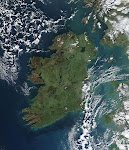
"If you go back far enough you find that your ancestors came from somewhere different and from someone different.  Genealogy teaches that there is no pure race, tribe, or religion.  The indisputable truth is that we are all mongrels and all cousins."  - Paraphrased from Irish Government Web Site on Genealogy Research.

The Awful Storms of 30 July 1885 that 
Killed Thomas Ducklow
[Published April 25, 2010]

Thomas Ducklow, second son and fourth child of Thomas and Elizabeth Ducklow, was tragically killed by lightening while sleeping in his farmhouse bed in the early morning of July 30, 1885. He was 36 years old.  Two accounts of his death and details of the storm that killed him were originally published in the Hartford Press (Hartford, Wisconsin) on July 31st and August 7th of 1885 and are re-published here [see footnote].  They are a fascinating read.


Left: Lightening Image from Wiki Commons


Four things you might notice while reading these accounts is how values, sensitivities, and child labor laws have changed in 125 years:

(1) Newspaper writing of the day was both flowery and graphic in detail,
(2) Priority of values —the first article describes the loss of barns, hay, equipment and farm animals ahead of the loss of human life,
(3) The innocent description of two men in the same bed for the practical purpose of sleeping,
(4) The apparent starting age of a shoemaker apprentices was about 11 years old


Here are the two newspaper accounts:


Hartford Press
July 31, 1885
Page 3, Col. 4

A terrific electrical storm passed over this locality last Wednesday night.  The storm, which commenced about eleven o’clock, was preceded by a violent wind, which was followed by heavy rain and in many places hail.  There was on continuous roar of thunder accompanied by wind and incessant, flashes of lightning which lighted the whole heavens and earth for miles around which at times rendered the midnight as bright as the glare of the noonday sun.  Our citizens were soon aroused and lights were seen flashing from many windows.  Soon the sound of the fire bell was heard ringing an alarm, and the voices and hurried footsteps of the firemen were evidence that the lightning had effected its work of destrction [sic] somewhere in the neighborhood.  It was soon learned that two large barns one belonging to Eugene Anderson, and other to Bruno Gehring, just north of the city had been struck and were in flames.  Both barns with their contents were entirely consumed.  Mr. Gehring’s loss aside from his barn was about twenty-five tons of hay, and a quantity of farming tools.  Mr. Anderson’s loss was much greater, he having one valuable horse killed, and a calf smothered in the flames.  He lost about twenty tons of hay, all his farming tools, wagons, sleights and harness.  Both barns were insured.  The house of Thomas Duklow [sic] in the north part of Ashippun was struck by lightning, and Mr. Duklow [sic] was killed by the stroke while in his bed.  This is the saddest result of the storm.  A son of Mrs. Wapp of this city, who was sleeping in the same bed with Duklow as badly shocked but it is thought the will recover.  It is believed that other accidents happened in the adjoining towns, but which up to this writing have not been reported.


Hartford Press
August 7, 1885
Page 3, Col. 3-4

DEATH NOTICES

Thomas Ducklow, whom we reported in our last issue as being killed by lightning at his home in Ashippun, on Wednesday night of last week, was born in the city of New York in the year 1849, and had he lived until September next, would have been thirty six years old.  He was a single man, and his sister was keeping house for him at the time the fatal accident occurred.  There were at the time four persons in the house, all sleeping on the upper floor.  Mr. Ducklow and the hired boy, Wapp occupying one bed, and a brother of deceased in another bed in the same room, and his sister who slept in an adjoining room.  The bolt of electricity struck the chimney, and passed down to the stove pipe into the room, and near where deceased and Wapp were sleeping; leaving the stove pipe the current divided and took different directions.  The fatal portion seemed to leave the pipe in a direct line for the bed.  Coming in contact with the left leg of deceased it passed upward to his head, burning the hair from his left temple.  One of Wapp’s knees that was resting against the body of deceased was injured so that it turned black and he himself was for a time insensible.  Mr. Ducklow must have been awake at the time, as only a few minutes before he was up and closed the windows.  The deceased was well known and highly respected in this and the neighborhood where he lived, having resided in this vicinity since he was an infant one year old.  He was a shoemaker by trade, and in years past worked for different firms at his trade in this city.  In fact he served his first apprenticeship and learned his trade here with Mr. Fred Brause; some twenty five years ago.  While a resident here, as elsewhere he enjoyed the earned and honored reputation of being a sober, steady industrious and honorable man, any and all of which must be long credited to his memory by all the living who knew him in life.  He was buried at St. Paul’s cemetery on Saturday last, a large concourse of friends and neighbors being in attendance.


Right: Grave marker for Thomas Ducklow. Born Sept. 18, 1848, Died July 30, 1885.  This marker stands approximately 9 feet tall and is one of the largest in the small St. Paul's Cemetery in Ashippun Township, Dodge County, Wisconsin.


The death of son Thomas was a major milestone in Ducklow family history, as has been noted in earlier posts.  Thomas' death was the likely event that set spelling of the Ducklow name used by the greater family in America today.  Prior to his death, the spelling of the family name varied greatly, including Dukelow, Duklow, Duclow and Ducklow.  Note even the difference in spelling in the two accounts above.  Upon Thomas' death, the family decided to purchase a tombstone and have a hire a mason to chisel his name in the stone.  Naturally, the mason needed to know how the family wanted the name spelled.  Our ancestral grandparents Thomas and Elizabeth and Thomas' parents were not literate, and so the decision on the proper spelling was decided by the ten surviving adult children.  They came to choose the "Ducklow" spelling over the more common "Dukelow" spelling in use by many of their cousins.  Once the name was chiseled into Thomas' grave marker, the name became consistantly used by all of Thomas and Elizabeth's children and their descendants.  You might say it was in 1885 that the greater Ducklow family name in America became "written in stone."


 ❧

Footnote: The copyright of these articles has expired and they are in the public domain.


Are Ducklow Descendants Living Longer Over Time?
The short answer: “Yes.”
[Published April 15, 2010]

Having birth and death dates for many of our common ancestors, I became interested in seeing if, through time, the Greater Ducklow family was living longer.  The answer is “Yes.”   From births of descendants born in the 1840s to those born in 1920s the average age of death rose significantly – from age 51 to age 71. 

Of this 20-year gain in lifespan, most of the increase came in the period of the 1860s to 1880s and was primarily due to fewer infant deaths.  The sharp increase then leveled to an average death at age 66 - 67 in the 1880s through the 1910s.  Longer average life spans of those born in the 1910s would have likely continued to increase beyond age 67 but several men’s lives were cut short when killed while serving in the military [WWII].  Descendants born in the 1920s did live longer, with an average death age of 71 [see footnote 1].  There is not enough death dates to analyze average lifespan for those born after 1929.  Here is the data:

Birth Period    # of Births   % Yet Living   Avg. Death Age   Death Age Range
1840s-1850s          11                  0%                          51                       1-90
1860s-1870s          10                  0%                          66                       7-87
1880s-1890s          21                  0%                          67                       0-93
1900s-1910s          41                  3%                          67*                     0-98
1920s                      40                 25%                         71*                     15-85

What was initially surprising is how low the average death age is.  Examining the data in detail shows that the infant and youth mortality rate had big impact on the averages.  Of the 113 known births and deaths for this study, there were six deaths of children between the ages of 0 and 2.  There were five deaths of children between the ages of 3 and 19 and there where three deaths of young adults between the ages of 20 and 25.
So this leads to the question: “Of the Ducklow descendants that lived to be over 25 years old, what is the average age of death?” Here is the data:

Birth Period    # of Births   % Yet Living   Avg. Death Age   Death Age Range
1840s-1850s           8                 0%                         69                         36-90
1860s-1870s           9                 0%                         73                         52-87
1880s-1890s         18                 0%                         77                         46-93
1900s-1910s         35                 3%                         76*                       49-98
1920s                     39                25%                        72*                       36-85

Those descendants born in the 1840s-1850s who survived there childhood and early adulthood went on to live to an average age of 69, a gain of 18 years of life!  Surviving these early years also added to the average age of death in the other time periods too, but not as dramatically.
OK, so what happens if you look at all the Ducklow descendants in the study group that lived to at least age 50?  How much of an increase in the average life span occur if you live at least that long?  The answer: On average, the death age occurs in the mid- to late-seventies.  This lifespan occurs consistently for all time periods the descendant was born. Here is the data:
Birth Period    # of Births   % Yet Living   Avg. Death Age   Death Age Range
1840s-1850s           6                 0%                           79                        58-90
1860s-1870s           9                 0%                           73                        52-87
1880s-1890s          17                0%                           79                        57-93
1900s-1910s          35                3%                           78*                      51-98
1920s                      33               25%                          77*                      56-85

Interestingly, no one in the greater Ducklow family born between 1840 and 1929 has lived to be over 98 years.  It seems likely that this statistic will not hold to be true for those born after the 1920s.

 ❧

Footnote 1: Study based on 113 known birth and death dates of the greater Ducklow family born between 1840 and 1929. 

 Footnote 2: Because the early data has so few ancestors, the data was grouped into 20-year time periods [expect the 1920s] in an attempt make the data more statistically valid.

 * Footnote 3:  There is one descendant born in the 1910s who is living.  The average age of death in this period could increase slightly upon her death.  There are ten descendants born in the 1920s who are living (out of a group of 40).  The average age of death for this time period will continue rise until all have passed.

 Footnote 4: While there is data on births and deaths for time periods beyond the 1920s, there is not enough data to perform meaningful analysis.

 Footnote 5: Our common ancestral grandparents, Thomas and Elizabeth Ducklow, were not included in the study as they were born in 1812 and 1822 respectively.  The data in the study is their descendants.  Thomas died at age 79 and Elizabeth died at age 81.  

Update on the Story of

Thomas Dukelow’s Immigration to the United States

[Published March 14, 2010] [Updated March 20, 2010]


Background:

Our ancestral grandfather Thomas Dukelow / Ducklow left Durrus Ireland and came to America in about the 1841 via Canada. He was 29 years old and acted as the father-figure escorting his then widowed stepmother Nancy Ann Dukelow, along with her eight young children, to a new land.  After traveling by ship for two or so months, Nancy, Thomas and the eight children arrived at Port Hope, Ontario by way of the St. Lawrence River.  After a short stay in there, the group crossed Lake Erie and initially settled near Rochester, New York.  It was in Rochester that Thomas married Elizabeth Nicholson and there they started a family.  This sketch of Thomas’ immigration story has been described in pervious posts and has solid source documentation.


A Richer Understanding:

Recently shared information from fellow Dukelow family researchers have shed more light on what might have been Thomas and his stepmother’s motivation to emigrate from Ireland. They were part of a much larger exodus of the Dukelow clan [footnote 1] to Canada and America. Scores of inter-related cousins, aunts, uncles, parents and grandparents left Ireland in the late 1830s and early 1840s. [footnote 2] The Dukelow clan immigration may have occurred from a “perfect storm” of events: (1) the collapse of home-based textile industry, (2) receipt of compelling letters from young pioneering cousins describing opportunities in America and (3) the advent of affordable fares on sailing ships crossing the Atlantic. Let me expand on each of these elements in some detail:


Collapse of Textile Cottage Industry

In reviewing the history of emigration of families around Durrus in the early 19th century, one can infer that some members of the Dukelow clan made their living, at least in part, from home-based manufacturing of textiles [footnote 3]. Prior to the late 1700s, nearly all textiles were made by cottage-industry businesses using manually powered looms and other manual equipment.  But by the early 1800s textile manufacturing became highly industrialized with the introduction of steam- and water-powered looms— and part of a broad technology change called the "industrial revolution."  Factory-based manufacturing became highly efficient and eventually caused the collapse of home-based textile businesses.  As more and more factories opened in the 1800s, small manual labor-based makers could no longer compete.  This economic transition no doubt caused real hardship on some, if not many, members of the Dukelow clan.


Letters Home

Two clan members who were effected by the  poor economy of the 1830s were John and William Connell (brothers). In a biographical sketch of her grandfather William Connell, Elsie McFarland wrote that the brothers became “frustrated with lack opportunities” in Ireland [see footnote 4].  So in 1837 John and William, at ages 29 and 23, left Western County Cork and eventually arrived in New York State.  Upon arriving the brothers had success finding work helping build the Erie Canal.  And by 1839 William had saved enough money to travel to Wisconsin to purchase government homestead land in what later became Washington County.  William and John both sent letters back home describing their freedoms, land purchases and work available for industrious men. From Elsie's biography on William, "no tyranny, no oppression from landlords and no taxes" [footnote 4].


No doubt their letters also expressed their sadness over missing family.  Elsie's biography expressed as, “… his heart was heavy and he longed to see the dear ones.  He would like to have his family have the chance he was having so he sent glowing letters home about this wonderful country.  These letters were eagerly read not only by his own family but by the aunts and uncles and cousins.”   William and John’s letters were apparently compelling as many in the clan chose to leave the ever more difficult economic environment in County Cork and join them in America. Again from Elsie’s biography, “A large group decided to come based on these letters.  No doubt that the group was not just William’s family, but [Martha] Elizabeth’s too.”


In August of 1842 William Connell married our ancestral grandfather’s half-sister, Martha Elizabeth Dukelow in Rochester, New York. After they wed, they moved to William’s homesteaded land and are reported to have been one of the first 16 pioneer families to establish themselves in Washington County, Wisconsin [footnote 4].


Affordable Fares

One would expect the cost of having many family members and belongings transported across the Atlantic to be prohibitively expensive.   But starting the early 1820s it became affordable due in large-part to Ireland’s need for timber [footnote 3 and footnote 7].  Ireland’s domestic supply of timber was becoming scarce and demand high and rising. In the 1800s wood was not only used for building homes and shelters, but also an energy source for heating and cooking, and the raw material for making tools and furniture.  And as factory technology developed, wood demand rose even further as a supplement to coal as fuel for steam-powered machinery. To meet the demand, trees were harvested and shipped from Canada, which like Ireland, belonged to the British Empire.  Timber cut in the forests of Quebec and Ontario came to Ireland via sailing ships that traveled the St. Lawrence River and then across the Atlantic Ocean.  Owners of the vessels made good money on the delivery their timber cargo but made little or nothing on nearly empty return trips to Canada. So, with encouragement by the British government in supporting  landlords wanting to rid themselves of impoverished  tenants, ship owners offered affordable fares [see footnote 7].  This strategy was successful filling ships holds with many emigrates.  It became so successful that ship owners began making more money sending emigrates west than they did in bringing timber east [see footnote 6].

It seems possible that our ancestral grandfather Thomas, and his stepfamily made their voyage to Ontario on such a timber ship.  One vessel in particular is noted as carrying Dukelows to Canada. The ‘Dealy Brig’, a ship built in 1839, sailed from Bantry in West Cork, near Durrus [footnote 3].  Thomas’ arrival in the United States was in about 1841 matching well with the operations of this particular timber ship, although the typical North American destination of this ship was apparently St. Johns, New Brunswick [see footnote 5].  It would be great to locate records showing Thomas and family on a specific voyage.  The quest continues.

 ❧

Footnotes:

(1) Various family surnames names associated with the Dukelow clan include Clark Attridges, Bakers, Skues, Swantons, Sweetnam, Capithorn, Connell, Kingstons, Vickeries, Roycrofts, Shannons and Salters; all members of the protestant Church of Ireland.


(2) Notably, the Dukelow clan’s exodus in the late 1830s and early 1840s was prior to the potato famine years of 1845 to 1852 when an estimated one million Irish to America in what were called "Famine Ships" to avoid starvation.


(3) Either inferred or quoted from Pat Crowley’s “History of Durrus District, Barony of West Carbery, Western Division.”  Mr. Crowley lives in Dublin, Ireland and has become an expert historian of the Durrus area.  He has shared the text of this self-published work.


(4) Elsie Barbara Kingston McFarlane wrote an eight-page biography of William and Elizabeth (Martha) Connell in 1948 when she was 67 years old.  Elsie’ biography is based upon her early memories of her grandparents.  She was eleven years old when her grandfather William passed away in 1892 and 27 years old when her grandmother Elizabeth (Martha) passed away in 1908. Elizabeth was the oldest of John and Nancy's children, and was a half-sister to ancestral grandfather Thomas. The biography is not dated. But the date can be inferred from a reference she makes in the biography that the Bank of Chilton (founded by William Connell) was in business for 57 years.  The bank was founded in 1891 and so the date of 1948 can be determined.  


(5) “What Happened to the Good Ship Dealy?,” http://www.dalyclan.org/Brig/brig.htm


(6)  "The Famine Ships," by Edward Laxton, page 7


(7) Steerage fares are reported to have been £3 and 10 shillings in the 1850s.  An estimated equivalent value in 2010 US dollars is roughly $250 (based on 3% inflation over 160 years). While not cheap, it seems it was not an impossible price to pay.

 ❧
Esther Northfield Ducklow Passes
[Published March 11, 2010]

Esther Northfield Ducklow, one of my genealogy mentors on the Ducklow family, passed away on March 9, 2010.  She was 94.  Esther came into the Ducklow family when she married Willis Ducklow in 1935. She became very interested in genealogy research for both her family (Northfield) as well as the Ducklow family.  She likely started digging into Ducklow history when Willis was still living, prehaps as early as 1970 and continued until the last few years of her life.  Her 40 years of search resulted in a treasure trove of information on Ducklows that she freely shared with me.  Esther was comfortable using both "old school" methods of research by digging through microfilm of newspapers, writing letters, and walking cemeteries and "new school" methods of hunting for information on rootsweb and emailing other genealogists using a computer.  She was the only person I knew above 90 years old that seemed really comfortable with a computer.  I will miss her sharp wit, directness in comments and overall feistiness. 

You can find her on-line obituary here.

Peace, Sweat Peace Esther.


Pedigree: Esther married Willis Ducklow.  Willis > Frank > George > Thomas & Elizabeth Ducklow.


Durrus, County Cork, Ireland
[Published February 28, 2010]

Recently I had the unexpected pleasure of being contacted by Pat Crowley of Dublin, Ireland.  Mr. Crowley has become an expert on the history of Durrus, Ireland.  Durrus is the area that our ancestral grandfather Thomas Dukelow / Ducklow emigrated from.  Mr. Crowley has done much research, writing and photographing Durrus.  He also has friends with the 


Sheepshead Peninsula, near Durrus, County Cork, Ireland
Source: Pat Crowley, Dalkey (Dublin), Ireland


Dukelow surname that live in the Durrus area.  Mr. Crowley has offered to share information to aid in the quest to find a solid link back to the Dukelow Clan of Ireland.  Pat has provided tables of birth and death information, photographs of grave markers in Durrus cemeteries, and a text on Durrus history that includes references to Dukelows.

Alas, I wish I could report a breakthrough.  Not yet. But the information is so tantalizing. Especially so because the given names of many of the Durrus families overlap with the names used by Thomas in naming his children:  John, Thomas, Mary Ann, Elizabeth, Charles, Richard, James, Peter, Fanny and even Lucinda.  This gives me encouragement that eventually we will find a link of this modern-day Dukelows back to Thomas and his father.  As often happens in research, Mr. Crowley has given me another contact in Ireland who has worked the Ireland Dukelow family tree, which should include the Dukelows of Durrus.  Stay tuned!

Mr. Crowley has given me permission to share some of the photos that he has taken around the Durrus area.  They provide a taste of the architecture of new and old buildings that make up Durrus today.


Photographs of buildings in and around Durrus, Ireland:


Footnote: Esther Northfield Ducklow, Grant Dukelow Brown, and Clayton Swanton have independently spent many hours and much effort in trying find Dukelow links to family in Ireland.  Grant Brown and Clayton Swanton have each traveled to Ireland, but did not make a significant break-though in finding a documented connection.    Up to this point, no information was been found that specifically connects our Thomas Dukelow / Ducklow back to the Durrus Dukelows.   Finding a link might be called the search for the "Holly Grail" of the Ducklow genealogy quest.


Update on
Twins and Triplets in the Greater Ducklow Family
[Published February 24, 2010]

About a year ago I posted a story in this blog on the known number of twins and triplets in the Greater Ducklow family. Since that post, over 250 new descendants have been identified; the number of descendants now stands at about 1000. Because of the growth in the size of the family tree, I thought it time to look at the multiple birth statistics again.
 
There are now eight known sets of twins and two known sets of triplets born to descendants of Thomas and Elizabeth Ducklow.  The number of sets of twins is up by four from a year ago and there has been no change in the number of triplets.  The sets of twins remains lower than what would be expected—we would normally see 20 to 29 sets for 1000 births. The typical number of sets of triplets for 1000 births is about 1.6, so the two sets in our greater family seems about right.

Here are the years and lines of birth of the twins and triplets:


A set of twins born in 1932; descendants of George Ducklow
A set of twins born in 1935; descendants of Mary Ann Ducklow Good
A set of twins born in 1938; descendants of Mary Ann Ducklow Good
A set of twins born in 1962; descendants of Peter Ducklow
A set of twins born in 1982; descendants of John Ducklow
A set of twins born in 1993; descendants of Peter Ducklow
A set of triplets born in 1996; descendants of George Ducklow
A set of triples born in 1996; descendants of Charles Ducklow
A set of twins born in 1998; descendants of George Ducklow
A set of twins born in 1999; descendants of George Ducklow

There is a possibility too that Thomas and Elizabeth's eighth and ninth children where twins: Infant Elizabeth and Infant Maria Jane, both born around 1855 or 1856. Information is lacking, but at least one fellow genealogist believes that these two infants could have been twins. Both of these children died as infants or toddlers. Maria Jane likely in 1856 and Elizabeth in February of 1857.


Footnote: The research continues on identifying all descendants of Thomas and Elizabeth Ducklow. 1000 is the number charted so far. 

Footnote: Source of the twin and triplet birth rate information comes from the March of Dimes web site. Link here.

Eldon Dean Catura

Descendant of Thomas and Elizabeth Ducklow Passes

[Posted February 21, 2010]

Eldon Catura of Tuscon, Arizona and former resident of Stevens Point, Wisconsin passed away on February 3, 2010.  He was 82 years old.  Eldon was the great great grandson of Thomas and Elizabeth Ducklow.  His genealogy link back to Thomas and Elizabeth Ducklow is:

Eldon Catura > Nellie Good Catura > William Good > Mary Ann Ducklow Good > Thomas and Elizabeth Ducklow


His obituary [see footnote]:

Eldon D. Catura

82, Stevens Point, died Wednesday, February 3, 2010 at his home. He was under the care Ministry Home Care Hospice Services. Born July 10, 1927 in Owen, Wisconsin.

Eldon served the United States Army during WWII. He was honorably discharged in 1946. He married Mary Louise Neilsen of Withee, WI in 1952. He worked and retired from GT & E, now known as Verizon, after 40 years with the company. Upon retirement, he moved to Tucson, AZ with his wife, Mary Louise, who survives him. He is also survived by four children, Neilsen of Madison, Bradford (Anita) of Milwaukee, Brent (Ruth) of Stevens Point, Nathan (Peg) of New Berlin.  Three Grandchildren, Nicholas, Katelyn, and Benjamin. 

Memorial services will be at Redeemer Lutheran Church, Stevens Point, on Saturday, February 20, 2010. Visitation at 11:00AM, service at 12:00 Noon with luncheon following the service. Burial will take place at a later date in Riverside cemetery in Withee, WI.

 Pisarski Community Funeral Home and Cremation Center in Plover is assisting the family with arrangements. For online condolences, please visit www.pisarskifuneralhome.com.

Pisarski Community Funeral Home And Cremation Center

Plover

344-7454

 ❧

Footnote: Source of obituary is www.pisarskifuneralhome.com/index.cfm found on February 19, 2010


A Boyhood Camping Misadventure

[Published January 2, 2010]


This is a story from my own (Jeff Ducklow) boyhood experience regarding a camping with friends along the Eau Galle River in Spring Valley, Wisconsin. [See footnote 1].

One warm spring day there was much talk among my friends about the upcoming trout fishing “opener.”  While I didn’t know anything about fishing for trout (and still don’t know much) I loved the idea of going camping with a bunch of buddies near the river.  So while I should have been paying attention to my fifth grade teacher, Mrs. O’Connell and her lesson about diagramming sentences, I was mentally scheming about getting some friends together for a camping outing that night.


Just a year or so earlier dad had purchased a large canvas tent with a set of twenty-some aluminum poles for our family.  It came from the world famous outfitterSears Roebuck & Company. When properly assembled the tent created a small room that you could stand up in. It could sleep six, and maybe even eight guys if you squished together.  The canvas tent, poles and stakes all together probably weighed 30 to 35 lbs.  State-of-the-art for family camping in those days.


The other critical element of my camping planthe Eau Galle Riverwas also was just a few hundred yards from our house.  Lying between our house and the river was a large cow pasture offering lots of flat space for setting up a tent. The only down side was that, before pitching the tent, you had to look for a spot that didn’t have any fresh “cow pies.”  A ten year-old never minds the details of knowing who owns the prospective camping ground or seeking their permission.  It seemed that anyone owning that piece of land knew that it was prime camping territory and thus fair game to anyone with the desire to lug his or her camping supplies over the four strands of barbed wire fence to get to it.


So when that Friday school day ended, I asked a bunch of friends if they wanted to join me in camping next to the river that night.  As I recall the group that came together was Jody Hannack, Mitchell Gjovik, Mike Lansing and myself [see footnote 2].  I had asked a few more friends, but they were unable to gain permission from their parents.  This was likely, at least in-part, due to the very short-notice given, but in larger part due to forecast of heavy thunderstorms called for later that evening [see footnote 3]. I had not considered that storms would play a role in our camping experience, so news of likely storms dampened my enthusiasm a bit and no doubt planted a seed for a new camp location.  While some friends couldn’t come, we had a group of four, a big enough party to make a go of it.


As my friends came together at my house to start the process of lugging gear to the cow pasture near the river, a new camping spot came to mind.  Maybe we should set up the tent on top of the hill behind our house instead of hauling all the camping gear all the way to the river.  It was a shorter haul, even if it was up an incline of a steep hill. There was a relatively flat spot at the top of the ridge next to our 30 foot high television antenna tower (the antenna allowed our family to get free, but snowy reception at our home in the valley).  The ridge location still gave us a good overlook of the river, even though we couldn’t enjoy being right next to it.  It also gave us an option of having quicker access to my house if the predicted storms got bad.


The storms got bad. 


It rained very hard and heavy.  It started late, maybe midnight or one in the morning and went steady all night long.  I don’t think Jody, Mitch, Mike and I had been asleep very long before the thunder claps and waves of pelting rain woke us up.  After listening to it pour and boom for over an hour, we noticed that our canvas tent began to seep in water.  Our beds started getting wet and there was no sign that the rain was going to stop soon.   It was then and there that we decided it was time to collect our sleeping bags and walk down the hill in the rain and lightening to get into my dry and warm house. We were soaked by the time we made down the hill dragging pillows and sleeping bags.  Mom heard us come in (she was probably expecting us) and got up to make sure we were all right.  She got towels to dry us off and made sure everyone had a bed to sleep in for the rest of the night.


By 8:00 a.m. the next morning we were all up and sitting around the kitchen table having breakfast.  As we were eating toast and Cheerios, Mitch’s dad had unexpectantly arrived.  He was driving his station wagon in a very slow manner up our long driveway.  When he got to our door and saw us, we each witnessed the oddest mixture of emotions I think I have ever seen on a man’s face at one time.  He was at once mad, over-joyed and then relieved with welling tears in his eyes.


You see the last word he had from Mitch was that we were setting up camp next to the Eau Galle for which he gave his approval.  At 3:00 the morning he awoke to the strong storms and became concerned about his son, and all of us sleeping in tent next to what had to be a rising Eau Galle river.  He decided to get dressed and go find us. But of course he could not.


Mitch had told his dad where we had planned to camp on the pasture near the river.  But when he arrived in the middle of the night there was no tent, no gear, and so sign of us. The Eau Galle had risen up and was running swiftly over some low lying places immediately next to the river.  Mr. Gjovik spent the rest of the night and into the early morning looking for us by walking along the banks of the swollen river, all while it continued to pour rain, searching for any sign of us or our belongings.  As time went on he became more and more convinced that we had camped right next the river in a low lying spot and river had risen quickly enough to have washed us and our gear all down stream.   When he arrived at our house in the morning he was prepared to tell my parents about his search, and his genuine fear that we had all drowned. He was quite reluctant to deliver this devastating news thus explaining his slow drive up our driveway.


So the sight we witnessed on his face as he came in our house was his emotional relief from hours of angst he had while searching up and down the river and not finding us. We of course we felt terrible to have unintentionally caused him such anguish.  We only wished he had come to our home much earlier to see if we might be there. Of course my parents knew our location and knew that we were inside for the better part of the storm.  Ironically, our camping spot on the ridge 70 feet above the river valley floor was safer from potential floods than nearly all of the homes in Spring Valley. When Mr. Gjovik saw that we were all happy, warm and eating breakfast he quickly forgave us for the terrible ordeal he went through.  Our being safe was the best news he could have hoped for after he had convinced himself, just a short time earlier, of our watery demise. 


Of course a couple lessons were learned from this boyhood misadventure, including learning to let all parents know the location of all camping outings and to remembering to call parents with any change of plans. Especially Mitch’s dad, Mr. Gjovik.


Footnote: In the spring of 1969, my classmates and I were ten years old.

Footnote:  It is difficult to believe that my ever careful mother allowed me to plan to go camping next to the river with friends at the tender age of ten.  Or approve of the selected alternative of pitching a tent on top of a hill next to a 30 foot metal tower that could act as a lightening rod during electrical storms.  But I do not recall her giving any objections at all to these plans.  My guess is that my dad moderated her concerns allowing boys to have these experiences.

Footnote: The Eau Galle River has a long history of being prone to flooding.  The most notable occurred in the fall of 1942 that virtually destroyed the village of Spring Valley.  Because of the history of floods, the U.S. Army Corps of Engineers built a large earthen dam just upstream of the villiage during the mid-1960s.  The dam now captures sudden surges from the water-shed due to heavy rains and melting snow.  A side benefit of the dam is that it created a reservoir called Lake George.  Even thou the dam prevents serve flooding, residents of Spring Valley that lived through the flood of 1942 have been ever careful about trusting the river.


For Want of a Chain

Published December 20, 2009

Peter Ducklow [see footnote] was a strong and determined man, apparently even late in his life.  His work ethic no doubt a reflection of being raised on a homestead farm carved-out of the wilderness by his pioneer family. His grandson, George Ducklow, recalled one story recently that really attests to his strength and determination.


Left: Peter Ducklow, 1901


In the 1930s, when Peter was some 70 years old, he lived in the city of Oconomowoc. He would regularly walk from his home in the city to his old farm that was about three miles to the north.  At this time his son Maurice was running the farm.  On one particular day Peter and Maurice were working to pull a large stone or a stump out of a field.  To get the job done they needed a heavy gauge logging chain.  They searched the farm, but could not find one that would do the job.  Peter decided that he must have one back at his home back in Oconomowoc.  So he walked the three miles back home to get it. He must have become disgusted, as he couldn’t find one at his home either.  So his next option was to buy one. 

Apparently there was no merchant in Oconomowoc who had what he wanted, so Peter then decided walked to Waukesha, some 18 miles to the east.  It was there he found what he was looking for, a heavy gauge chain suitable for the job he had in mind.  Peter made his purchase and then wrapped the 30 or 40-pound chain across his shoulders and neck. Satisfied he had what he needed, he set off on foot back towards the farm, some 21 miles ahead.  In all Peter walked some 45-50 miles that day, and about half of those miles with the chain around him. Not bad for a 70-something year-old man.  Oh yeah, and Peter did this with a major disability: he was blind in one eye!

Footnote: Story told by George Ducklow to Jeff Ducklow on December 12, 2009

Footnote: Peter was the 12th child and youngest son of Thomas and Elizabeth Ducklow.  The farm referenced here is not the original Ducklow pioneer farm, but rather Peter's own farm that was about six  miles to the south and west of the original  homestead.