
Update on the Story of
Thomas Dukelow’s Immigration to the United States
[Published March 14, 2010] [Updated March 20, 2010]
Background:
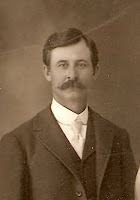
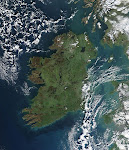
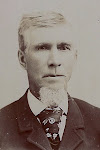
Our ancestral grandfather Thomas Dukelow / Ducklow left Durrus Ireland and came to America in about the 1841 via Canada. He was 29 years old and acted as the father-figure escorting his then widowed stepmother Nancy Ann Dukelow, along with her eight young children, to a new land. After traveling by ship for two or so months, Nancy, Thomas and the eight children arrived at Port Hope, Ontario by way of the St. Lawrence River. After a short stay in there, the group crossed Lake Erie and initially settled near Rochester, New York. It was in Rochester that Thomas married Elizabeth Nicholson and there they started a family. This sketch of Thomas’ immigration story has been described in pervious posts and has solid source documentation.
A Richer Understanding:
Recently shared information from fellow Dukelow family researchers have shed more light on what might have been Thomas and his stepmother’s motivation to emigrate from Ireland. They were part of a much larger exodus of the Dukelow clan [footnote 1] to Canada and America. Scores of inter-related cousins, aunts, uncles, parents and grandparents left Ireland in the late 1830s and early 1840s. [footnote 2] The Dukelow clan immigration may have occurred from a “perfect storm” of events: (1) the collapse of home-based textile industry, (2) receipt of compelling letters from young pioneering cousins describing opportunities in America and (3) the advent of affordable fares on sailing ships crossing the Atlantic. Let me expand on each of these elements in some detail:
Collapse of Textile Cottage Industry
In reviewing the history of emigration of families around Durrus in the early 19th century, one can infer that some members of the Dukelow clan made their living, at least in part, from home-based manufacturing of textiles [footnote 3]. Prior to the late 1700s, nearly all textiles were made by cottage-industry businesses using manually powered looms and other manual equipment. But by the early 1800s textile manufacturing became highly industrialized with the introduction of steam- and water-powered looms— and part of a broad technology change called the "industrial revolution." Factory-based manufacturing became highly efficient and eventually caused the collapse of home-based textile businesses. As more and more factories opened in the 1800s, small manual labor-based makers could no longer compete. This economic transition no doubt caused real hardship on some, if not many, members of the Dukelow clan.
Letters Home
Two clan members who were effected by the poor economy of the 1830s were John and William Connell (brothers). In a biographical sketch of her grandfather William Connell, Elsie McFarland wrote that the brothers became “frustrated with lack opportunities” in Ireland [see footnote 4]. So in 1837 John and William, at ages 29 and 23, left Western County Cork and eventually arrived in New York State. Upon arriving the brothers had success finding work helping build the Erie Canal. And by 1839 William had saved enough money to travel to Wisconsin to purchase government homestead land in what later became Washington County. William and John both sent letters back home describing their freedoms, land purchases and work available for industrious men. From Elsie's biography on William, "no tyranny, no oppression from landlords and no taxes" [footnote 4].
No doubt their letters also expressed their sadness over missing family. Elsie's biography expressed as, “… his heart was heavy and he longed to see the dear ones. He would like to have his family have the chance he was having so he sent glowing letters home about this wonderful country. These letters were eagerly read not only by his own family but by the aunts and uncles and cousins.” William and John’s letters were apparently compelling as many in the clan chose to leave the ever more difficult economic environment in County Cork and join them in America. Again from Elsie’s biography, “A large group decided to come based on these letters. No doubt that the group was not just William’s family, but [Martha] Elizabeth’s too.”
In August of 1842 William Connell married our ancestral grandfather’s half-sister, Martha Elizabeth Dukelow in Rochester, New York. After they wed, they moved to William’s homesteaded land and are reported to have been one of the first 16 pioneer families to establish themselves in Washington County, Wisconsin [footnote 4].
Affordable Fares
One would expect the cost of having many family members and belongings transported across the Atlantic to be prohibitively expensive. But starting the early 1820s it became affordable due in large-part to Ireland’s need for timber [footnote 3 and footnote 7]. Ireland’s domestic supply of timber was becoming scarce and demand high and rising. In the 1800s wood was not only used for building homes and shelters, but also an energy source for heating and cooking, and the raw material for making tools and furniture. And as factory technology developed, wood demand rose even further as a supplement to coal as fuel for steam-powered machinery. To meet the demand, trees were harvested and shipped from Canada, which like Ireland, belonged to the British Empire. Timber cut in the forests of Quebec and Ontario came to Ireland via sailing ships that traveled the St. Lawrence River and then across the Atlantic Ocean. Owners of the vessels made good money on the delivery their timber cargo but made little or nothing on nearly empty return trips to Canada. So, with encouragement by the British government in supporting landlords wanting to rid themselves of impoverished tenants, ship owners offered affordable fares [see footnote 7]. This strategy was successful filling ships holds with many emigrates. It became so successful that ship owners began making more money sending emigrates west than they did in bringing timber east [see footnote 6].
It seems possible that our ancestral grandfather Thomas, and his stepfamily made their voyage to Ontario on such a timber ship. One vessel in particular is noted as carrying Dukelows to Canada. The ‘Dealy Brig’, a ship built in 1839, sailed from Bantry in West Cork, near Durrus [footnote 3]. Thomas’ arrival in the United States was in about 1841 matching well with the operations of this particular timber ship, although the typical North American destination of this ship was apparently St. Johns, New Brunswick [see footnote 5]. It would be great to locate records showing Thomas and family on a specific voyage. The quest continues.
❧
Footnotes:
(1) Various family surnames names associated with the Dukelow clan include Clark Attridges, Bakers, Skues, Swantons, Sweetnam, Capithorn, Connell, Kingstons, Vickeries, Roycrofts, Shannons and Salters; all members of the protestant Church of Ireland.
(2) Notably, the Dukelow clan’s exodus in the late 1830s and early 1840s was prior to the potato famine years of 1845 to 1852 when an estimated one million Irish to America in what were called "Famine Ships" to avoid starvation.
(3) Either inferred or quoted from Pat Crowley’s “History of Durrus District, Barony of West Carbery, Western Division.” Mr. Crowley lives in Dublin, Ireland and has become an expert historian of the Durrus area. He has shared the text of this self-published work.
(4) Elsie Barbara Kingston McFarlane wrote an eight-page biography of William and Elizabeth (Martha) Connell in 1948 when she was 67 years old. Elsie’ biography is based upon her early memories of her grandparents. She was eleven years old when her grandfather William passed away in 1892 and 27 years old when her grandmother Elizabeth (Martha) passed away in 1908. Elizabeth was the oldest of John and Nancy's children, and was a half-sister to ancestral grandfather Thomas. The biography is not dated. But the date can be inferred from a reference she makes in the biography that the Bank of Chilton (founded by William Connell) was in business for 57 years. The bank was founded in 1891 and so the date of 1948 can be determined.
(5) “What Happened to the Good Ship Dealy?,” http://www.dalyclan.org/Brig/brig.htm
(6) "The Famine Ships," by Edward Laxton, page 7
(7) Steerage fares are reported to have been £3 and 10 shillings in the 1850s. An estimated equivalent value in 2010 US dollars is roughly $250 (based on 3% inflation over 160 years). While not cheap, it seems it was not an impossible price to pay.
❧


Footnote: Esther Northfield Ducklow, Grant Dukelow Brown, and Clayton Swanton have independently spent many hours and much effort in trying find Dukelow links to family in Ireland. Grant Brown and Clayton Swanton have each traveled to Ireland, but did not make a significant break-though in finding a documented connection. Up to this point, no information was been found that specifically connects our Thomas Dukelow / Ducklow back to the Durrus Dukelows. Finding a link might be called the search for the "Holly Grail" of the Ducklow genealogy quest.
[Published February 24, 2010]
About a year ago I posted a story in this blog on the known number of twins and triplets in the Greater Ducklow family. Since that post, over 250 new descendants have been identified; the number of descendants now stands at about 1000. Because of the growth in the size of the family tree, I thought it time to look at the multiple birth statistics again.
A set of twins born in 1962; descendants of Peter Ducklow
A set of triplets born in 1996; descendants of George Ducklow
A set of triples born in 1996; descendants of Charles Ducklow
A set of twins born in 1998; descendants of George Ducklow
A set of twins born in 1999; descendants of George Ducklow
There is a possibility too that Thomas and Elizabeth's eighth and ninth children where twins: Infant Elizabeth and Infant Maria Jane, both born around 1855 or 1856. Information is lacking, but at least one fellow genealogist believes that these two infants could have been twins. Both of these children died as infants or toddlers. Maria Jane likely in 1856 and Elizabeth in February of 1857.
Footnote: The research continues on identifying all descendants of Thomas and Elizabeth Ducklow. 1000 is the number charted so far.
Footnote: Source of the twin and triplet birth rate information comes from the March of Dimes web site. Link here.
Eldon Dean Catura
Descendant of Thomas and Elizabeth Ducklow Passes
[Posted February 21, 2010]
Eldon Catura of Tuscon, Arizona and former resident of Stevens Point, Wisconsin passed away on February 3, 2010. He was 82 years old. Eldon was the great great grandson of Thomas and Elizabeth Ducklow. His genealogy link back to Thomas and Elizabeth Ducklow is:
Eldon Catura > Nellie Good Catura > William Good > Mary Ann Ducklow Good > Thomas and Elizabeth Ducklow
❧
His obituary [see footnote]:
Eldon D. Catura
82, Stevens Point, died Wednesday, February 3, 2010 at his home. He was under the care Ministry Home Care Hospice Services. Born July 10, 1927 in Owen, Wisconsin.
Eldon served the United States Army during WWII. He was honorably discharged in 1946. He married Mary Louise Neilsen of Withee, WI in 1952. He worked and retired from GT & E, now known as Verizon, after 40 years with the company. Upon retirement, he moved to Tucson, AZ with his wife, Mary Louise, who survives him. He is also survived by four children, Neilsen of Madison, Bradford (Anita) of Milwaukee, Brent (Ruth) of Stevens Point, Nathan (Peg) of New Berlin. Three Grandchildren, Nicholas, Katelyn, and Benjamin.
Memorial services will be at Redeemer Lutheran Church, Stevens Point, on Saturday, February 20, 2010. Visitation at 11:00AM, service at 12:00 Noon with luncheon following the service. Burial will take place at a later date in Riverside cemetery in Withee, WI.
Pisarski Community Funeral Home and Cremation Center in Plover is assisting the family with arrangements. For online condolences, please visit www.pisarskifuneralhome.com.
Pisarski Community Funeral Home And Cremation Center
Plover
344-7454
❧
Footnote: Source of obituary is www.pisarskifuneralhome.com/index.cfm found on February 19, 2010
❧
A Boyhood Camping Misadventure
[Published January 2, 2010]
This is a story from my own (Jeff Ducklow) boyhood experience regarding a camping with friends along the Eau Galle River in Spring Valley, Wisconsin. [See footnote 1].
❧
One warm spring day there was much talk among my friends about the upcoming trout fishing “opener.” While I didn’t know anything about fishing for trout (and still don’t know much) I loved the idea of going camping with a bunch of buddies near the river. So while I should have been paying attention to my fifth grade teacher, Mrs. O’Connell and her lesson about diagramming sentences, I was mentally scheming about getting some friends together for a camping outing that night.
Just a year or so earlier dad had purchased a large canvas tent with a set of twenty-some aluminum poles for our family. It came from the world famous outfitter—Sears Roebuck & Company. When properly assembled the tent created a small room that you could stand up in. It could sleep six, and maybe even eight guys— if you squished together. The canvas tent, poles and stakes all together probably weighed 30 to 35 lbs. State-of-the-art for family camping in those days.
The other critical element of my camping plan—the Eau Galle River—was also was just a few hundred yards from our house. Lying between our house and the river was a large cow pasture offering lots of flat space for setting up a tent. The only down side was that, before pitching the tent, you had to look for a spot that didn’t have any fresh “cow pies.” A ten year-old never minds the details of knowing who owns the prospective camping ground or seeking their permission. It seemed that anyone owning that piece of land knew that it was prime camping territory and thus fair game to anyone with the desire to lug his or her camping supplies over the four strands of barbed wire fence to get to it.
So when that Friday school day ended, I asked a bunch of friends if they wanted to join me in camping next to the river that night. As I recall the group that came together was Jody Hannack, Mitchell Gjovik, Mike Lansing and myself [see footnote 2]. I had asked a few more friends, but they were unable to gain permission from their parents. This was likely, at least in-part, due to the very short-notice given, but in larger part due to forecast of heavy thunderstorms called for later that evening [see footnote 3]. I had not considered that storms would play a role in our camping experience, so news of likely storms dampened my enthusiasm a bit and no doubt planted a seed for a new camp location. While some friends couldn’t come, we had a group of four, a big enough party to make a go of it.
As my friends came together at my house to start the process of lugging gear to the cow pasture near the river, a new camping spot came to mind. Maybe we should set up the tent on top of the hill behind our house instead of hauling all the camping gear all the way to the river. It was a shorter haul, even if it was up an incline of a steep hill. There was a relatively flat spot at the top of the ridge next to our 30 foot high television antenna tower (the antenna allowed our family to get free, but snowy reception at our home in the valley). The ridge location still gave us a good overlook of the river, even though we couldn’t enjoy being right next to it. It also gave us an option of having quicker access to my house if the predicted storms got bad.
The storms got bad.
It rained very hard and heavy. It started late, maybe midnight or one in the morning and went steady all night long. I don’t think Jody, Mitch, Mike and I had been asleep very long before the thunder claps and waves of pelting rain woke us up. After listening to it pour and boom for over an hour, we noticed that our canvas tent began to seep in water. Our beds started getting wet and there was no sign that the rain was going to stop soon. It was then and there that we decided it was time to collect our sleeping bags and walk down the hill in the rain and lightening to get into my dry and warm house. We were soaked by the time we made down the hill dragging pillows and sleeping bags. Mom heard us come in (she was probably expecting us) and got up to make sure we were all right. She got towels to dry us off and made sure everyone had a bed to sleep in for the rest of the night.
By 8:00 a.m. the next morning we were all up and sitting around the kitchen table having breakfast. As we were eating toast and Cheerios, Mitch’s dad had unexpectantly arrived. He was driving his station wagon in a very slow manner up our long driveway. When he got to our door and saw us, we each witnessed the oddest mixture of emotions I think I have ever seen on a man’s face at one time. He was at once mad, over-joyed and then relieved with welling tears in his eyes.
You see the last word he had from Mitch was that we were setting up camp next to the Eau Galle for which he gave his approval. At 3:00 the morning he awoke to the strong storms and became concerned about his son, and all of us sleeping in tent next to what had to be a rising Eau Galle river. He decided to get dressed and go find us. But of course he could not.
Mitch had told his dad where we had planned to camp on the pasture near the river. But when he arrived in the middle of the night there was no tent, no gear, and so sign of us. The Eau Galle had risen up and was running swiftly over some low lying places immediately next to the river. Mr. Gjovik spent the rest of the night and into the early morning looking for us by walking along the banks of the swollen river, all while it continued to pour rain, searching for any sign of us or our belongings. As time went on he became more and more convinced that we had camped right next the river in a low lying spot and river had risen quickly enough to have washed us and our gear all down stream. When he arrived at our house in the morning he was prepared to tell my parents about his search, and his genuine fear that we had all drowned. He was quite reluctant to deliver this devastating news thus explaining his slow drive up our driveway.
So the sight we witnessed on his face as he came in our house was his emotional relief from hours of angst he had while searching up and down the river and not finding us. We of course we felt terrible to have unintentionally caused him such anguish. We only wished he had come to our home much earlier to see if we might be there. Of course my parents knew our location and knew that we were inside for the better part of the storm. Ironically, our camping spot on the ridge 70 feet above the river valley floor was safer from potential floods than nearly all of the homes in Spring Valley. When Mr. Gjovik saw that we were all happy, warm and eating breakfast he quickly forgave us for the terrible ordeal he went through. Our being safe was the best news he could have hoped for after he had convinced himself, just a short time earlier, of our watery demise.
Of course a couple lessons were learned from this boyhood misadventure, including learning to let all parents know the location of all camping outings and to remembering to call parents with any change of plans. Especially Mitch’s dad, Mr. Gjovik.
❧
Footnote: In the spring of 1969, my classmates and I were ten years old.
❧
Footnote: It is difficult to believe that my ever careful mother allowed me to plan to go camping next to the river with friends at the tender age of ten. Or approve of the selected alternative of pitching a tent on top of a hill next to a 30 foot metal tower that could act as a lightening rod during electrical storms. But I do not recall her giving any objections at all to these plans. My guess is that my dad moderated her concerns allowing boys to have these experiences.
❧
Footnote: The Eau Galle River has a long history of being prone to flooding. The most notable occurred in the fall of 1942 that virtually destroyed the village of Spring Valley. Because of the history of floods, the U.S. Army Corps of Engineers built a large earthen dam just upstream of the villiage during the mid-1960s. The dam now captures sudden surges from the water-shed due to heavy rains and melting snow. A side benefit of the dam is that it created a reservoir called Lake George. Even thou the dam prevents serve flooding, residents of Spring Valley that lived through the flood of 1942 have been ever careful about trusting the river.
❧
For Want of a Chain
Published December 20, 2009
Peter Ducklow [see footnote] was a strong and determined man, apparently even late in his life. His work ethic no doubt a reflection of being raised on a homestead farm carved-out of the wilderness by his pioneer family. His grandson, George Ducklow, recalled one story recently that really attests to his strength and determination.

Left: Peter Ducklow, 1901
In the 1930s, when Peter was some 70 years old, he lived in the city of Oconomowoc. He would regularly walk from his home in the city to his old farm that was about three miles to the north. At this time his son Maurice was running the farm. On one particular day Peter and Maurice were working to pull a large stone or a stump out of a field. To get the job done they needed a heavy gauge logging chain. They searched the farm, but could not find one that would do the job. Peter decided that he must have one back at his home back in Oconomowoc. So he walked the three miles back home to get it. He must have become disgusted, as he couldn’t find one at his home either. So his next option was to buy one.
Apparently there was no merchant in Oconomowoc who had what he wanted, so Peter then decided walked to Waukesha, some 18 miles to the east. It was there he found what he was looking for, a heavy gauge chain suitable for the job he had in mind. Peter made his purchase and then wrapped the 30 or 40-pound chain across his shoulders and neck. Satisfied he had what he needed, he set off on foot back towards the farm, some 21 miles ahead. In all Peter walked some 45-50 miles that day, and about half of those miles with the chain around him. Not bad for a 70-something year-old man. Oh yeah, and Peter did this with a major disability: he was blind in one eye!
❧
Footnote: Story told by George Ducklow to Jeff Ducklow on December 12, 2009
Footnote: Peter was the 12th child and youngest son of Thomas and Elizabeth Ducklow. The farm referenced here is not the original Ducklow pioneer farm, but rather Peter's own farm that was about six miles to the south and west of the original homestead.
❧
Broken Heart List
A Long Marriage — Then a Spouse Dies—And Then Just a Short While Later the Remaining Spouse Dies...
Did the Remaining Spouse Die of a Broken Heart?
[Updated November 10, 2009]
There are 84 known marriages in the Greater Ducklow family where both partners are now deceased. Of these 84, five couples passed-away within just a few months of each other. What is also notable is all five had very long marriages. Was the stress of losing a life partner too much to bear?
The five couples are:
(1) Melvin Clyde Blair died in Minneapolis on October, 1982, age 67. His wife Daisy Marie Buis Blair died just 13 days later on October 16th, 1982. She was just age 56. The exact length of their marriage is unknown, but estimated to be about 34 years.
(2) Elizabeth “Lizzie” Wagner Ducklow died in Wilton, Wisconsin on February 14, 1935 from cancer. She was just 45 years old. Elmer Eugene Ducklow died 3 months later on May 19, 1935 of a heart attack at age 46. They had been married 24 years.
(3) Thomas Edward Ducklow died March 21, 1983 in Green Bay, Wisconsin. He was 79 years old. His wife Mary Ann Sucky Ducklow died 3 months later on May 26, 1983. She was 78 years old. They had been married for about 47 years.
(4) Donald G Good died November 25, 1994 in Hartwell, Georgia. He was 84 years old. His wife Anita Togstad Good died in January 1995. About 3 months later. She was age 82. They were married 50 years.
(5) Ida Imogene LaGrander Smith died January 12, 1982 in Elkhorn, Wisconsin, age 78. Her husband Daniel Francis Smith died 6 months later on July 14, 1982. He was age 81. They had been married 58 years.
❧
Footnote: Pedigrees back to Thomas & Elizabeth Ducklow:
Melvin Blair > Nellie Hanson Blair > Elizabeth Ducklow Hanson > Thomas & Elizabeth Ducklow
Elmer Ducklow > Charles Ducklow > Thomas & Elizabeth Ducklow
Thomas Ducklow > Peter Ducklow > Thomas & Elizabeth Ducklow
Donald Good > Sidney Good > Mary Ann Ducklow Good > Thomas & Elizabeth Ducklow
Ida LaGrander > Nellie LaGrander Ducklow > George Ducklow > Thomas & Elizabeth Ducklow
❧
Helicopter Crash Kills
U.S. Foreign Service Attaché James F. Hogan
Hogan was Great Great Grandson of
Thomas and Elizabeth Ducklow
[Updated November 9, 2009]
Colonel James F. Hogan was killed in a helicopter accident that occurred some 700 miles north of the Arctic Circle near Thule [pronounced too lee] Air Base in Greenland. The crash happened on August 26, 1959. Col. Hogan was just 41 years old. He was the son of Francis “Con” Hogan and Evelyn Good Hogan of Ashland, Wisconsin descends from Mary Ann Ducklow Good.
The doomed flight was, at least in part, a humanitarian mission returning an Inuit native to her village after she received surgery at the Thule Air Force Base Hospital. Six others were also killed in the crash, including a U.S. diplomat to Denmark named Livingston Lord Satterthwaite. The crashed occurred after dropping-off the Eskimo women and the flight was just minutes from landing back at Thule.

Left: Col. James F. Hogan, Circa 1943. Photo from the Susan Noskoviak Collection
Col. James Hogan’s title was air attaché at the American Embassy in Copenhagen, Denmark. In this role he was the face of the United States Air Force to the Denmark government and coordinated military travel arrangements for Embassy officials. Prior to this assignment he had been attached to American Embassy in Sweden. Col. Hogan had served his country since World War II and had been a prisoner of war of the Germans for 19 months.
The helicopter crash in Greenland was widely reported in many U.S. newspapers, as diplomat Satterthwaite was a noted figure in United States - European relations. At the time of the crash, the United States Ambassador to Denmark was Val Peterson. He paid tribute to both men by saying:
“The American Embassy in Denmark has suffered a tragic blow and the American Foreign Service and the U.S. Air Force have lost two of the most promising young officers.”

Thule U.S. Air Force Base in Greenland
A pilot of a C54 [a DC 8 modified for military use] was escorting the helicopter. He reported that it was behaving peculiarly as it descended from an altitude of 2,700 feet in preparations for landing at Thule. About 11 miles from the base he lost sight of the helicopter and then received an emergency signal. A short time later he saw the burning wreckage some 50 feet from the shore of Baffin Bay. This is the whole account of the accident as there were no survivors. The cause of the crash remains a mystery, at least to this author, as no follow-up newspaper articles or other accounts of the cause of the accident have been found.

Location of Thule U.S. Air Force Base, Northwestern corner of Greenland. Illustration from Strategic-Air-Command.Com
So what was a helicopter crew, carrying attaché Hogan and U.S. diplomat Satterthwaite doing some 700 miles north of the Arctic Circle in Greenland? In three words: The Cold War.
Thule Air Base is located roughly half way between Colorado Springs, Colorado and Moscow using the “great circle” route. In the early 1950s the United States, under an agreement with Denmark (which governs Greenland), built Thule in northwestern Greenland. It is part of America’s early warning detection system scanning the skies for offensive missiles headed towards U.S. soil. It too houses nuclear tipped ballistic missiles that are capable of striking major cities in Russia. At one point Thule housed several thousand military personnel; today it houses fewer than 1,000.

No doubt that the Livingston Lord Satterthwait, as a U.S. diplomat to Copenhagen, was conducting meetings with Thule Air Force Base command personnel around the nature of U.S. nuclear arms in Greenland. He was likely communicating issues expressed by the Denmark government over operations of the then six year-old base. The specific mission of delivering the Inuit women back to her village after surgery at the military hospital was a “photo-op” to demonstrate to the native people and to the Denmark government a very positive benefit of having a U.S. base with a hospital in far northwestern corner of the country.
Forty-Four Years Later: A Memorial
American Embassy in Copenhagen Denmark. Building Opened in 1954. Picture from http://denmark.usembassy.gov/
In 2003 The U.S. State Department honored the memories of Col. Hogan and diplomat Satterthwaite. A memorial plaque at the Embassy in Copenhagen was unveiled in a ceremony on July 14th 2003. It notes the sacrifice these men made to our nation under the Cold War era. Ambassador Stuart A. Bernstein, who presided at the unveiling, said that the families of the men killed should comfort in knowing their loved one helped advance the cause of freedom during the Cold War. Several members of Satterthwait’s family, including his widow, attended the event. It was reported that members of Col. Hogan’s family would have been invited guests as well, but State Department officials were unable to locate them. [see footnote].
At this writing it is unknown to this author if descendants of the Hogan family have yet become aware of the 2003 honor bestowed by the State Department regarding James’ sacrifice to our nation.
❧
Footnote: Before Thule Air Force Base was built in the early 1950s the United States (under the Franklin Roosevelt administration) attempted to buy Greenland from Denmark. While an offer was made, apparently the Danes had no interest in selling, and so the offer went unanswered. Perhaps as a compromise to outright sale of the country, Copenhagen agreed to allow the U.S. to build a base in the far northwestern corner of the country.
❧
Footnote: Thule means the most northerly region of the habitable world to ancient Greek geographers.
❧
Footnote: The building of Thule AFB was a major secret. Called project Blue Jay, 12,000 men, based out of Navy ships send from Virginia, built much of Thule during the summers of 1951, ’52 and ‘53. It was an amazing feat of engineering, which went unreported, due to its secret military nature. It has been compared to the same amount of effort taken to build the Panama Canal. Nearly all of Greenland is tundra and Thule Base and airstrip is built entirely on permafrost, making installation of stable footings a challenge. Thule is also “locked-in” by sea ice nine months out of the year, making construction a race in getting supplies to the project. Ships must arrive soon as the ice is thin and must depart before thick ice forms again curtaining shipments for another nine months.
❧
Footnote: Regarding the State Department’s difficulty in locating immediate family of James Hogan in 2003: James' wife, Evelyn, is believed to be living, but is known to have married twice after her husband James’ death in 1959. Her surnamed changed in each of these marriages. James and Evelyn Hogan’s daughter Eve, age 13 at the time her father’s death, is living but has also married twice, changing her surname with each marriage. In addition, both mother and daughter have lived away from Ashland Wisconsin for decades. James’ father Francis died 10 years prior to James’ death. His mother Evaline died in 1969. And James’ two brothers had also passed before 2003; Jack in 1966 and Mickey in 1994.
❧
Footnote: While the helicopter crash and death of seven men in 1959 is tragic it is not the most notable aircraft crash associated with Thule Air Base. A near nuclear disaster occurred near Thule on January 21, 1968. A United States Air Force B-52 bomber was carrying four hydrogen bombs during a Cold War alert mission was flying a figure-eight pattern over Baffin Bay Greenland. An in-flight cabin fire started. It became out of control forcing the seven members on board to abandon the aircraft before they could execute an emergency landing. Six of the crew ejected safely, but one who did not have an ejection seat was killed while exiting the bomber. The then unmanned B-52 crashed on the sea ice in North Star Bay 7.5 miles west of Thule Air Base causing the nuclear payload to break apart and disperse radioactive material across three miles of sea ice. A clean-up effort was immediately launched by the United States and Denmark to recover the radioactive material. Part of one of the nuclear weapons was never accounted for and continues to be source of environmental / weapons debate in Danish politics.
❧
Footnote: Ducklow Pedigree: James Francis Hogan > Evaline Josphine Good > James Walter Good > Mary Ann Ducklow Good > Thomas and Elizabeth Ducklow
❧
Sources:
Ironwood Daily Globe, Ironwood, Michigan, August 28, 1959, Page 1 “Tribute is Paid Ashland Officer Thule Copter Crash Kills Two Badger Men”
Oshkosh Daily Northwestern, Oshkosh, Wisconsin, Saturday, August 29, 1959, “Officer Killed in Helicopter Crash Had Cousin in City”
American Foreign Service Association News, October 2003, Page 3, http://www.afsa.org/fsj/oct03/AFSANEWSOct2003.pdf, “1959 Thule Helicopter Crash Victims Remembered”
United States Depart of State, State Magazine, October 2003, Page 8, http://www.state.gov/documents/organization/25073.pdf, “Never Too Late to Remember”
Thule Air Base, http://en.wikipedia.org/wiki/Thule_Air_Base
1968 Thule Air Base B-52 Crash, Wikipeda, http://en.wikipedia.org/wiki/1968_Thule_Air_Base_B-52_crash
Greenland, Wikipedia, http://en.wikipedia.org/wiki/Greenland
Time Magazine, January 27, 1947, National Affairs: Deepfreeze Defense http://www.time.com/time/magazine/article/0,9171,778870,00.html
Thule Air Base, http://wapedia.mobi/en/Thule_Air_Base
❧