A Boyhood Camping Misadventure

[Published January 2, 2010]


This is a story from my own (Jeff Ducklow) boyhood experience regarding a camping with friends along the Eau Galle River in Spring Valley, Wisconsin. [See footnote 1].

❧

One warm spring day there was much talk among my friends about the upcoming trout fishing “opener.”  While I didn’t know anything about fishing for trout (and still don’t know much) I loved the idea of going camping with a bunch of buddies near the river.  So while I should have been paying attention to my fifth grade teacher, Mrs. O’Connell and her lesson about diagramming sentences, I was mentally scheming about getting some friends together for a camping outing that night.


Just a year or so earlier dad had purchased a large canvas tent with a set of twenty-some aluminum poles for our family.  It came from the world famous outfitter—Sears Roebuck & Company. When properly assembled the tent created a small room that you could stand up in. It could sleep six, and maybe even eight guys— if you squished together.  The canvas tent, poles and stakes all together probably weighed 30 to 35 lbs.  State-of-the-art for family camping in those days.


The other critical element of my camping plan—the Eau Galle River—was also was just a few hundred yards from our house.  Lying between our house and the river was a large cow pasture offering lots of flat space for setting up a tent. The only down side was that, before pitching the tent, you had to look for a spot that didn’t have any fresh “cow pies.”  A ten year-old never minds the details of knowing who owns the prospective camping ground or seeking their permission.  It seemed that anyone owning that piece of land knew that it was prime camping territory and thus fair game to anyone with the desire to lug his or her camping supplies over the four strands of barbed wire fence to get to it.


So when that Friday school day ended, I asked a bunch of friends if they wanted to join me in camping next to the river that night.  As I recall the group that came together was Jody Hannack, Mitchell Gjovik, Mike Lansing and myself [see footnote 2].  I had asked a few more friends, but they were unable to gain permission from their parents.  This was likely, at least in-part, due to the very short-notice given, but in larger part due to forecast of heavy thunderstorms called for later that evening [see footnote 3]. I had not considered that storms would play a role in our camping experience, so news of likely storms dampened my enthusiasm a bit and no doubt planted a seed for a new camp location.  While some friends couldn’t come, we had a group of four, a big enough party to make a go of it.


As my friends came together at my house to start the process of lugging gear to the cow pasture near the river, a new camping spot came to mind.  Maybe we should set up the tent on top of the hill behind our house instead of hauling all the camping gear all the way to the river.  It was a shorter haul, even if it was up an incline of a steep hill. There was a relatively flat spot at the top of the ridge next to our 30 foot high television antenna tower (the antenna allowed our family to get free, but snowy reception at our home in the valley).  The ridge location still gave us a good overlook of the river, even though we couldn’t enjoy being right next to it.  It also gave us an option of having quicker access to my house if the predicted storms got bad.


The storms got bad. 


It rained very hard and heavy.  It started late, maybe midnight or one in the morning and went steady all night long.  I don’t think Jody, Mitch, Mike and I had been asleep very long before the thunder claps and waves of pelting rain woke us up.  After listening to it pour and boom for over an hour, we noticed that our canvas tent began to seep in water.  Our beds started getting wet and there was no sign that the rain was going to stop soon.   It was then and there that we decided it was time to collect our sleeping bags and walk down the hill in the rain and lightening to get into my dry and warm house. We were soaked by the time we made down the hill dragging pillows and sleeping bags.  Mom heard us come in (she was probably expecting us) and got up to make sure we were all right.  She got towels to dry us off and made sure everyone had a bed to sleep in for the rest of the night.


By 8:00 a.m. the next morning we were all up and sitting around the kitchen table having breakfast.  As we were eating toast and Cheerios, Mitch’s dad had unexpectantly arrived.  He was driving his station wagon in a very slow manner up our long driveway.  When he got to our door and saw us, we each witnessed the oddest mixture of emotions I think I have ever seen on a man’s face at one time.  He was at once mad, over-joyed and then relieved with welling tears in his eyes.


You see the last word he had from Mitch was that we were setting up camp next to the Eau Galle for which he gave his approval.  At 3:00 the morning he awoke to the strong storms and became concerned about his son, and all of us sleeping in tent next to what had to be a rising Eau Galle river.  He decided to get dressed and go find us. But of course he could not.


Mitch had told his dad where we had planned to camp on the pasture near the river.  But when he arrived in the middle of the night there was no tent, no gear, and so sign of us. The Eau Galle had risen up and was running swiftly over some low lying places immediately next to the river.  Mr. Gjovik spent the rest of the night and into the early morning looking for us by walking along the banks of the swollen river, all while it continued to pour rain, searching for any sign of us or our belongings.  As time went on he became more and more convinced that we had camped right next the river in a low lying spot and river had risen quickly enough to have washed us and our gear all down stream.   When he arrived at our house in the morning he was prepared to tell my parents about his search, and his genuine fear that we had all drowned. He was quite reluctant to deliver this devastating news thus explaining his slow drive up our driveway.


So the sight we witnessed on his face as he came in our house was his emotional relief from hours of angst he had while searching up and down the river and not finding us. We of course we felt terrible to have unintentionally caused him such anguish.  We only wished he had come to our home much earlier to see if we might be there. Of course my parents knew our location and knew that we were inside for the better part of the storm.  Ironically, our camping spot on the ridge 70 feet above the river valley floor was safer from potential floods than nearly all of the homes in Spring Valley. When Mr. Gjovik saw that we were all happy, warm and eating breakfast he quickly forgave us for the terrible ordeal he went through.  Our being safe was the best news he could have hoped for after he had convinced himself, just a short time earlier, of our watery demise. 


Of course a couple lessons were learned from this boyhood misadventure, including learning to let all parents know the location of all camping outings and to remembering to call parents with any change of plans. Especially Mitch’s dad, Mr. Gjovik.


❧

Footnote: In the spring of 1969, my classmates and I were ten years old.

❧

Footnote:  It is difficult to believe that my ever careful mother allowed me to plan to go camping next to the river with friends at the tender age of ten.  Or approve of the selected alternative of pitching a tent on top of a hill next to a 30 foot metal tower that could act as a lightening rod during electrical storms.  But I do not recall her giving any objections at all to these plans.  My guess is that my dad moderated her concerns allowing boys to have these experiences.

❧

Footnote: The Eau Galle River has a long history of being prone to flooding.  The most notable occurred in the fall of 1942 that virtually destroyed the village of Spring Valley.  Because of the history of floods, the U.S. Army Corps of Engineers built a large earthen dam just upstream of the villiage during the mid-1960s.  The dam now captures sudden surges from the water-shed due to heavy rains and melting snow.  A side benefit of the dam is that it created a reservoir called Lake George.  Even thou the dam prevents serve flooding, residents of Spring Valley that lived through the flood of 1942 have been ever careful about trusting the river.

❧


For Want of a Chain

Published December 20, 2009

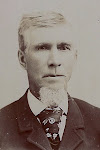
Peter Ducklow [see footnote] was a strong and determined man, apparently even late in his life.  His work ethic no doubt a reflection of being raised on a homestead farm carved-out of the wilderness by his pioneer family. His grandson, George Ducklow, recalled one story recently that really attests to his strength and determination.


Left: Peter Ducklow, 1901


In the 1930s, when Peter was some 70 years old, he lived in the city of Oconomowoc. He would regularly walk from his home in the city to his old farm that was about three miles to the north.  At this time his son Maurice was running the farm.  On one particular day Peter and Maurice were working to pull a large stone or a stump out of a field.  To get the job done they needed a heavy gauge logging chain.  They searched the farm, but could not find one that would do the job.  Peter decided that he must have one back at his home back in Oconomowoc.  So he walked the three miles back home to get it. He must have become disgusted, as he couldn’t find one at his home either.  So his next option was to buy one. 

Apparently there was no merchant in Oconomowoc who had what he wanted, so Peter then decided walked to Waukesha, some 18 miles to the east.  It was there he found what he was looking for, a heavy gauge chain suitable for the job he had in mind.  Peter made his purchase and then wrapped the 30 or 40-pound chain across his shoulders and neck. Satisfied he had what he needed, he set off on foot back towards the farm, some 21 miles ahead.  In all Peter walked some 45-50 miles that day, and about half of those miles with the chain around him. Not bad for a 70-something year-old man.  Oh yeah, and Peter did this with a major disability: he was blind in one eye!

❧

Footnote: Story told by George Ducklow to Jeff Ducklow on December 12, 2009

Footnote: Peter was the 12th child and youngest son of Thomas and Elizabeth Ducklow.  The farm referenced here is not the original Ducklow pioneer farm, but rather Peter's own farm that was about six  miles to the south and west of the original  homestead.

❧

Broken Heart List

 A Long Marriage — Then a Spouse Dies—And Then Just a Short While Later the Remaining Spouse Dies...

Did the Remaining Spouse Die of a Broken Heart? 

[Updated November 10, 2009]


There are 84 known marriages in the Greater Ducklow family where both partners are now deceased.  Of these 84, five couples passed-away within just a few months of each other.   What is also notable is all five had very long marriages. Was the stress of losing a life partner too much to bear?


The five couples are:

(1) Melvin Clyde Blair died in Minneapolis on October, 1982, age 67. His wife Daisy Marie Buis Blair died just 13 days later on October 16th, 1982.  She was just age 56.  The exact length of their marriage is unknown, but estimated to be about 34 years.

(2) Elizabeth “Lizzie” Wagner Ducklow died in Wilton, Wisconsin on February 14, 1935 from cancer.  She was just 45 years old.  Elmer Eugene Ducklow died 3 months later on May 19, 1935 of a heart attack at age 46.  They had been married 24 years.

 (3) Thomas Edward Ducklow died March 21, 1983 in Green Bay, Wisconsin.  He was 79 years old.  His wife Mary Ann Sucky Ducklow died 3 months later on May 26, 1983.  She was 78 years old.  They had been married for about 47 years.

(4) Donald G Good died November 25, 1994 in Hartwell, Georgia.  He was 84 years old. His wife Anita Togstad Good died in January 1995.  About 3 months later.  She was age 82.  They were married 50 years.

(5) Ida Imogene LaGrander Smith died January 12, 1982 in Elkhorn, Wisconsin, age 78.  Her husband Daniel Francis Smith died 6 months later on July 14, 1982.  He was age 81.  They had been married 58 years.

❧

Footnote: Pedigrees back to Thomas & Elizabeth Ducklow:

Melvin Blair > Nellie Hanson Blair > Elizabeth Ducklow Hanson > Thomas & Elizabeth Ducklow

Elmer Ducklow > Charles Ducklow > Thomas & Elizabeth Ducklow

Thomas Ducklow > Peter Ducklow > Thomas & Elizabeth Ducklow

Donald Good > Sidney Good > Mary Ann Ducklow Good > Thomas & Elizabeth Ducklow

Ida LaGrander > Nellie LaGrander Ducklow > George Ducklow > Thomas & Elizabeth Ducklow


❧

Helicopter Crash Kills

U.S. Foreign Service Attaché James F. Hogan


Hogan was Great Great Grandson of

Thomas and Elizabeth Ducklow

[Updated November 9, 2009]


Colonel James F. Hogan was killed in a helicopter accident that occurred some 700 miles north of the Arctic Circle near Thule [pronounced too lee] Air Base in Greenland.  The crash happened on August 26, 1959.  Col. Hogan was just 41 years old.  He was the son of Francis “Con” Hogan and Evelyn Good Hogan of Ashland, Wisconsin descends from Mary Ann Ducklow Good.

The doomed flight was, at least in part, a humanitarian mission returning an Inuit native to her village after she received surgery at the Thule Air Force Base Hospital.  Six others were also killed in the crash, including a U.S. diplomat to Denmark named Livingston Lord Satterthwaite.  The crashed occurred after dropping-off the Eskimo women and the flight was just minutes from landing back at Thule.


Left: Col. James F. Hogan, Circa 1943. Photo from the Susan Noskoviak Collection


Col. James Hogan’s title was air attaché at the American Embassy in Copenhagen, Denmark.  In this role he was the face of the United States Air Force to the Denmark government and coordinated military travel arrangements for Embassy officials.  Prior to this assignment he had been attached to American Embassy in Sweden.  Col. Hogan had served his country since World War II and had been a prisoner of war of the Germans for 19 months.

The helicopter crash in Greenland was widely reported in many U.S. newspapers, as diplomat Satterthwaite was a noted figure in United States - European relations.  At the time of the crash, the United States Ambassador to Denmark was Val Peterson.  He paid tribute to both men by saying:

“The American Embassy in Denmark has suffered a tragic blow and the American Foreign Service and the U.S. Air Force have lost two of the most promising young officers.”


Thule U.S. Air Force Base in Greenland


A pilot of a C54 [a DC 8 modified for military use] was escorting the helicopter.  He reported that it was behaving peculiarly as it descended from an altitude of 2,700 feet in preparations for landing at Thule.  About 11 miles from the base he lost sight of the helicopter and then received an emergency signal.  A short time later he saw the burning wreckage some 50 feet from the shore of Baffin Bay.  This is the whole account of the accident as there were no survivors. The cause of the crash remains a mystery, at least to this author, as no follow-up newspaper articles or other accounts of the cause of the accident have been found.


Location of Thule U.S. Air Force Base, Northwestern corner of Greenland. Illustration from Strategic-Air-Command.Com


So what was a helicopter crew, carrying attaché Hogan and U.S. diplomat Satterthwaite doing some 700 miles north of the Arctic Circle in Greenland?  In three words: The Cold War. 

Thule Air Base is located roughly half way between Colorado Springs, Colorado and Moscow using the “great circle” route.  In the early 1950s the United States, under an agreement with Denmark (which governs Greenland), built Thule in northwestern Greenland.   It is part of America’s early warning detection system scanning the skies for offensive missiles headed towards U.S. soil.  It too houses nuclear tipped ballistic missiles that are capable of striking major cities in Russia. At one point Thule housed several thousand military personnel; today it houses fewer than 1,000. 


Polar illustartion of great circle route from Colorado Springs, Colorado to Moscow, Russia.
Illustration made with tool from http://gc.kls2.com/


No doubt that the Livingston Lord Satterthwait, as a U.S. diplomat to Copenhagen, was conducting meetings with Thule Air Force Base command personnel around the nature of U.S. nuclear arms in Greenland.  He was likely communicating issues expressed by the Denmark government over operations of the then six year-old base. The specific mission of delivering the Inuit women back to her village after surgery at the military hospital was a “photo-op” to demonstrate to the native people and to the Denmark government a very positive benefit of having a U.S. base with a hospital in far northwestern corner of the country.


Forty-Four Years Later: A Memorial


American Embassy in Copenhagen Denmark. Building Opened in 1954. Picture from http://denmark.usembassy.gov/


In 2003 The U.S. State Department honored the memories of Col. Hogan and diplomat Satterthwaite.  A memorial plaque at the Embassy in Copenhagen was unveiled in a ceremony on July 14th 2003.  It notes the sacrifice these men made to our nation under the Cold War era.   Ambassador Stuart A. Bernstein, who presided at the unveiling, said that the families of the men killed should comfort in knowing their loved one helped advance the cause of freedom during the Cold War. Several members of Satterthwait’s family, including his widow, attended the event.  It was reported that members of Col. Hogan’s family would have been invited guests as well, but State Department officials were unable to locate them. [see footnote].

At this writing it is unknown to this author if descendants of the Hogan family have yet become aware of the 2003 honor bestowed by the State Department regarding James’ sacrifice to our nation.

❧

Footnote: Before Thule Air Force Base was built in the early 1950s the United States (under the Franklin Roosevelt administration) attempted to buy Greenland from Denmark.  While an offer was made, apparently the Danes had no interest in selling, and so the offer went unanswered.  Perhaps as a compromise to outright sale of the country, Copenhagen agreed to allow the U.S. to build a base in the far northwestern corner of the country.  

❧

Footnote: Thule means the most northerly region of the habitable world to ancient Greek geographers.

❧

Footnote: The building of Thule AFB was a major secret.  Called project Blue Jay, 12,000 men, based out of Navy ships send from Virginia, built much of Thule during the summers of 1951, ’52 and ‘53.  It was an amazing feat of engineering, which went unreported, due to its secret military nature.  It has been compared to the same amount of effort taken to build the Panama Canal.  Nearly all of Greenland is tundra and Thule Base and airstrip is built entirely on permafrost, making installation of stable footings a challenge. Thule is also “locked-in” by sea ice nine months out of the year, making construction a race in getting supplies to the project.  Ships must arrive soon as the ice is thin and must depart before thick ice forms again curtaining shipments for another nine months.

❧

Footnote: Regarding the State Department’s difficulty in locating immediate family of James Hogan in 2003: James' wife, Evelyn, is believed to be living, but is known to have married twice after her husband James’ death in 1959.  Her surnamed changed in each of these marriages.  James and Evelyn Hogan’s daughter Eve, age 13 at the time her father’s death, is living but has also married twice, changing her surname with each marriage.  In addition, both mother and daughter have lived away from Ashland Wisconsin for decades. James’ father Francis died 10 years prior to James’ death. His mother Evaline died in 1969. And James’ two brothers had also passed before 2003; Jack in 1966 and Mickey in 1994.

❧

Footnote:  While the helicopter crash and death of seven men in 1959 is tragic it is not the most notable aircraft crash associated with Thule Air Base.  A near nuclear disaster occurred near Thule on January 21, 1968.  A United States Air Force B-52 bomber was carrying four hydrogen bombs during a Cold War alert mission was flying a figure-eight pattern over Baffin Bay Greenland.  An in-flight cabin fire started.  It became out of control forcing the seven members on board to abandon the aircraft before they could execute an emergency landing.  Six of the crew ejected safely, but one who did not have an ejection seat was killed while exiting the bomber.   The then unmanned B-52 crashed on the sea ice in North Star Bay 7.5 miles west of Thule Air Base causing the nuclear payload to break apart and disperse radioactive material across three miles of sea ice.  A clean-up effort was immediately launched by the United States and Denmark to recover the radioactive material.  Part of one of the nuclear weapons was never accounted for and continues to be source of environmental / weapons debate in Danish politics. 

❧

Footnote: Ducklow Pedigree: James Francis Hogan > Evaline Josphine Good > James Walter Good > Mary Ann Ducklow Good > Thomas and Elizabeth Ducklow

 ❧

Sources:

Ironwood Daily Globe, Ironwood, Michigan, August 28, 1959, Page 1 “Tribute is Paid Ashland Officer Thule Copter Crash Kills Two Badger Men”

Oshkosh Daily Northwestern, Oshkosh, Wisconsin, Saturday, August 29, 1959, “Officer Killed in Helicopter Crash Had Cousin in City”

American Foreign Service Association News, October 2003, Page 3, http://www.afsa.org/fsj/oct03/AFSANEWSOct2003.pdf,  “1959 Thule Helicopter Crash Victims Remembered”

United States Depart of State, State Magazine, October 2003, Page 8, http://www.state.gov/documents/organization/25073.pdf, “Never Too Late to Remember”

Thule Air Base, http://en.wikipedia.org/wiki/Thule_Air_Base

1968 Thule Air Base B-52 Crash, Wikipeda, http://en.wikipedia.org/wiki/1968_Thule_Air_Base_B-52_crash

Greenland, Wikipedia, http://en.wikipedia.org/wiki/Greenland

Time Magazine, January 27, 1947, National Affairs: Deepfreeze Defense http://www.time.com/time/magazine/article/0,9171,778870,00.html

Thule Air Base, http://wapedia.mobi/en/Thule_Air_Base

❧


The Fruit Bowl Bet

(Its Not About Football)

[Updated October 19, 2009]

My Grandpa Vernie Ducklow passed away in 1961 at age 81 years.  He lived a full life, most of it around Spring Valley, Wisconsin.  It has been a bit difficult to find many stories about him, but here is one that is known:

In early 1907 Vernie and his pal Gideon Arneson were walking along the planks that formed the boardwalk [see footnote] of main street in Spring Valley. As they walked they came upon the display window of the Foss-Armstrong and Johns Hardware Company [see footnote].  This store was known for its hardware offerings, but it was also stocked with other merchandise too, including housewares that ranged from spatulas to flower vases.  Vernie and Gideon both paused and took notice of a very decorative and expensive fruit bowl prominently displayed in the store’s front window.  The beautiful glass bowl was handcrafted from translucent pink and white glass.  It had scalloped edges with gracefully curved sides and featured a hand-painted design of blue berries with gold-leaf flourishes.  The bowl sat ensconced in a four-legged base that connected to an ornate handle. The handle and base were masterfully crafted by a silversmith.  It was a piece of art and very stylish for that  period.


The Ornate Fruit Bowl 

Retailed at Foss-Armstrong-Johns Hardware Company, Spring Valley, Wisconsin

Manufactured circa 1906


Now it seems a bit odd that two single young men in there mid-twenties would stop and admire this beautiful fruit bowl.  But they did as you see that both were courting their future wives.  Neither one could afford to buy the bowl that day but each agreed that it would make a wonderful gift for one of their sweethearts.  Without means to purchase the bowl one would have thought this is where the conversation would have ended.  But apparently there was a bit of a rivalry between them regarding who would convince their respective girlfriend to marry them first.  One thing lead to another and soon a bet was on.  Right then and there they agreed that the first to marry would receive the bowl as a wedding gift from the other.


Vernon and Mina Ducklow Circa 1948


A few months later, on July 25, 1907, Vernie married Mina Bowen in Denver, Colorado (Vern was working at the machine shop for railroad at the time).  Eventually the newlyweds returned to Spring Valley and received many congratulations and well wishes along with a number of wedding gifts including one from Vernie’s pal Gideon.  Gideon had not forgotten about the bet he made several months prior.  He honored Vernie and Mina with the gift of the handcrafted fruit bowl with the silver handle that he had purchased at the Foss-Armstorng-Johns store.

Vernie and Mina cherished this wedding gift during their 54 years of marriage. The ornate bowl was likely one of the most valuable household possession that they ever owned, especially after losing much during the Great Depression.  Gideon Arneson did go on to marry too.  Federal Census records show that by 1910 he was wed a woman named Parmilia (Millie).  Like Vernie and Mina, Gideon and Millie spent their lives in and around Spring Valley and no doubt were friends with Vern and Mina through the years.


 The Rest of the Story

In 1961 Vernie passed away and by 1964 Mina became unable to care for herself and so she entered a nursing home.  In preparing for this, many of Mina’s household possessions went to her children including the ornate fruit bowl.  It was given to Mina’s daughter Audrey.  She and her husband Hank Thompson lived in Phoenix and so the bowl traveled from Spring Valley to Arizona in about 1964.   Sadly, just three years later Audrey passed away.  After Audrey’s death, the bowl had little meaning to Hank, and as Hank and Audrey had no children, he kindly gifted the bowl to Audrey's brother Vic.  Hank brought the bowl back to Wisconsin from Arizona in about 1970 during a vacation, but without the silver base.  He had not realized the bowl had a holder. For a while it was thought that the base was lost, but Hank later discovered it back in his home in Phoenix and then mailed it to Wisconsin.  Unfortunately, a slight bend of the handled occurred in shipping, but was expertly corrected by Vic. Without knowing the bend occurred, one could never tell.

Today the 100 plus year-old bowl with silver base and handle rests in an honored place in the Ducklow family.  It seems a bit of a miracle that this beautiful bowl has not been broken after all these years.  It is also a wonderful to know of how it came into the family so many years ago.

 ❧

Source: Pearl Neiderhauser Ducklow told this story to Jeff Ducklow October 11, 2009.

Footnote: Pedigree: Vernon George Ducklow > George Ducklow > Thomas and Elizabeth Ducklow

Footnote: Pearl Ducklow told this story referring to the hardware store as the Olsen-Wolf store.  This was the name of this mercantile when she was a young girl (1930s).  However, at the time of this story (1906-1907) it was owned by Foss who also owned a hardware store in Ellsworth, along with partners Armstrong and Daniel Boone Johns.  See page 419 of Doug Blegen's "Spring Valley Early Days" published in 1995.  The Foss-Armstrong-Johns hardware store location is now the present day location of the Spring Valley Drug Store; on the corner of 1st Street and McKay Avenue.

Footnote: Spring Valley did not have concrete sidewalks until the summer of 1910.  Up until then the walks were either dirt paths or elevated wood planks forming a boardwalk.  See page 209 of Doug Blegen's "Spring Valley Early Days."


❧

On this Day in October

[Published October 7, 2009]


October 1, 1990: Pauline Cecil Pearce Ducklow, age 81, dies in Blue Earth County, Minnesota.  In 1959 she married Gerald Erwin Ducklow.  Pedigree: Gerald and Pauline Ducklow > Frank Erwin Ducklow > George Ducklow > Thomas and Elizabeth Ducklow.

October 2, 2001: Gladys Nellie Blair Lloyd, age 89, died in Barron County, Wisconsin.  She was the daughter of Charles T and Nellie Hanson Blair.  Pedigree: Gladys Nellie Blair Lloyd > Nellie Hanson Blair > Elizabeth Ducklow Hanson > Thomas and Elizabeth Ducklow.

October 3, 1982: Melvin Clyde Blair, age 67, died in Minneapolis, Hennepin County, Minnesota.  He was the son of Charles T and Nellie Hanson Blair.  Pedigree: Melvin Clyde Blair > Nellie Hanson Blair > Elizabeth Ducklow Hanson > Thomas and Elizabeth Ducklow.

October 4, 1979: Victor Neal Ducklow, age 56, died in Minneapolis, Hennepin County, Minnesota.  He was the son of Vernon and Mina Ducklow.  Pedigree: Victor Neil Ducklow > Vernon Ducklow > George Ducklow > Thomas and Elizabeth Ducklow.

October 4, 1989: George Merle LaGrander, age 83, died in Chili, Adams County, Wisconsin.  He was the son of George and Nellie LaGrander. Pedigree: George Merle LaGrander > Nellie LaGrander Ducklow > George Ducklow > Thomas and Elizabeth Ducklow.

October 5, 1925: Joyce Elaine Ducklow was born in Rock Elm, Pierce County, Wisconsin.  She was the daughter of Frank Erwin and Jessie Ducklow. Pedigree: Joyce Elaine Ducklow > Frank Erwin Ducklow > George Ducklow > Thomas and Elizabeth Ducklow.

October 6, 1902: James Justus Good was born in Ashland, Ashland County, Wisconsin.  He was the son of James Walter and Effie Good.  Pedigree: James Justus Good > James Walter Good > Mary Ann Ducklow Good > Thomas and Elizabeth Ducklow.

October 6, 1993: Beatrice Blanche Van Nortwick Ducklow, age, 69, dies in Spring Valley, Piece County, Wisconsin.  She was the wife of Fay Ellsworth Ducklow.  Pedigree: Fay Ellsworth and Beatrice Ducklow > Frank Erwin Ducklow > George Ducklow > Thomas and Elizabeth Ducklow.

October 7, 1963: Meribel Klinefelter Good, age 84, died in Madison, Dane County, Wisconsin.  She married Sidney Good November 14, 1900.  Pedigree: Sidney and Meribel Good > Mary Ann Ducklow Good > Thomas and Elizabeth Ducklow.

October 7, 1990: Nellie Bernadine Lenore Good Catura, age 91, died in Clark County, Wisconsin.  She was the daughter of William Thomas and Lora Good.  Pedigree: Nellie Bernadine Good Catura > William Thomas Good > Mary Ann Ducklow Good > Thomas and Elizabeth Ducklow.

October 7, 1861: Blanche T Townsend was born in Oconomowoc, Waukesha County, Wisconsin.  In 1899 she married John T Ducklow. Pedigree: John and Blanche Ducklow > Thomas and Elizabeth Ducklow.

October 9, 1998: Hanna Sophia Osmunson Good, age 83, dies in Bonita Springs, Lee County, Florida.  She was the wife of Harold Eldon Good.  Pedigree: Harold and Hanna Good > William Thomas Good > Mary Ann Ducklow Good > Thomas and Elizabeth Ducklow.

October 10, 1856: Elizabeth J Ducklow was born in Ashippun Township, Dodge County, Wisconsin.  Pedigree: Elizabeth J Ducklow > Thomas and Elizabeth Ducklow.

October 12, 1927: Charles T Blair, age 51, died in Barron County, Wisconsin.  In 1904 he married Nellie Jane Hanson, daughter of Elizabeth DUCKLOW HANSON and John HANSON. Pedigree: Charles T & Nellie Hanson Blair > Elizabeth Ducklow Hanson > Thomas and Elizabeth Ducklow.

October 13, 1980: Anne Elizabeth Ostenson Holman, age 76, dies in Cass County, North Dakota.  She was the daughter of Gunder and Lucinda Ducklow Ostenson.  Pedigree: Anne Elizabeth Ostenson Holman > Lucinda Ducklow Ostenson > Thomas and Elizabeth Ducklow.

October 14, 1957: Jane Marie Rudesill is born in Menomonie, Dunn County, Wisconsin.  In 1981 she married Jeffrey Michael Ducklow.  Pedigree: Jeffrey and Jane Ducklow > Victor Neal Ducklow > Vernon Ducklow > George Ducklow > Thomas and Elizabeth Ducklow.

October 14, 1947: Lamont Vernon Ducklow marries Florence Irene McClurg in Pierce County, Wisconsin.  Pedigree: Lamont Vernon Ducklow > Vernon George Ducklow > George Ducklow > Thomas and Elizabeth Ducklow.

October 15, 1956: Francis George Good, age 87, died in Madison, Dane County Wisconsin.  He was the son of Frank Gallagher and Mary Ann Ducklow Good.  Pedigree: Francis George Good > Mary Ann Ducklow Good > Thomas and Elizabeth Ducklow.

October 16, 1876: Nellie Laurine Ducklow was born in Rock Elm, Pierce County, Wisconsin.  She was the daughter of George and Emma Ducklow.  Pedigree: Nellie Laurine Ducklow > George Ducklow > Thomas and Elizabeth Ducklow.

October 16, 1982: Daisy Marie Buis Blair, age 56, died in Hennepin County, Minnesota.  She married Melvin Clyde Blair. Pedigree: Melvin and Daisy Blair > Nellie Hanson Blair > Elizabeth Ducklow Hanson > Thomas and Elizabeth Ducklow.

October 16, 1930: Patrick Michael Hannafin was born.  In 1954 he married Mary Jane Ducklow, daughter of Clayton and Mary Ducklow. Pedigree: Patrick and Mary Jane Ducklow Hannafin > Clayton Hamilton Ducklow > George Ducklow > Thomas and Elizabeth Ducklow.

October 17, 1980: Francis Mary Good Hardy, age 84, died in Cottage Grove Township, Dane County, Wisconsin.  She was the daughter of James Walter and Effie Good.  Pedigree: Francis Mary Good Hardy > James Walter Good > Mary Ann Ducklow Good > Thomas and Elizabeth Ducklow.

October 18, 1885: Charles T Blair was born in Palmerson, Ontario, Canada.  In 1904 he married Nellie Jane Hanson, daughter of Elizabeth DUCKLOW HANSON and John HANSON.

October 18, 1928: Douglas C Ducklow was born in Iowa.  He was the son of Charles Edwin and Ella Ducklow.  Pedigree: Douglas C Ducklow > Charles Edwin Ducklow > Charles Ducklow > Thomas and Elizabeth Ducklow.

October 21, 1915: Esther Alice Northfield is born in Minneapolis, Hennepin County, Minnesota.  In 1935 she married Willis Francis Ducklow.  Pedigree: Willis and Esther Ducklow > Frank Erwin Ducklow > George Ducklow > Thomas and Elizabeth Ducklow

October 21, 2003: William Good Catura, age 81, died in Owen, Clark County, Wisconsin. He was the son of Willard and Nellie Good Catura.  Pedigree: William Good Catura > Nellie Lenore Good Catura > William Thomas Good > Mary Ann Ducklow Good > Thomas and Elizabeth Ducklow.

October 21, 1885: William Thomas Ducklow was born in Ashippun Township, Dodge County, Wisconsin.  Pedigree: William Thomas Ducklow > Thomas and Elizabeth Ducklow.

October 22, 1885: Thomas William Ducklow was born in Modena, Buffalo County, Wisconsin.  He was the son of Charles and Eva Shaw Ducklow.  Pedigree: Thomas William Ducklow > Charles Ducklow > Thomas and Elizabeth Ducklow.

October 23, 1919: Glenn Merrill Good married Luella J Johnson in Dane County, Wisconsin.  Glenn was the son of William Thomas and Lora Good.  Pedigree: Glenn Merrill Good > William Thomas Good > Mary Ann Ducklow Good > Thomas and Elizabeth Ducklow.

October 24, 1931: Gladys Nellie Blair married Fred Lloyd in Clinton Township of Barron County Wisconsin. Pedigree: Gladys Nellie Blair Lloyd > Nellie Hanson Blair > Elizabeth Ducklow Hanson > Thomas and Elizabeth Ducklow.

October 25, 1923: Winifred L Olson was born in Hennepin County, Minnesota.  In 1950 she married Thomas Clayton Ducklow.  Pedigree: Thomas Clayton and Winifred Ducklow > Clayton Hamilton Ducklow > George Ducklow > Thomas and Elizabeth Ducklow

October 25, 1919: Genevieve Margaret Mulheron is born in Spring Valley, Pierce County, Wisconsin.  In 1946 she married Frank Ruthbin Ducklow.  Pedigree: Frank and Genevieve Ducklow > Frank Erwin Ducklow > George Ducklow > Thomas and Elizabeth Ducklow.

October 26, 2002: Florence Idella Blair Davis, age 97, died in Barron County, Wisconsin.  She was the daughter of Charles T and Nellie HANSON.   Pedigree: Florence Idella Blair > Nellie Hanson Blair > Elizabeth Ducklow Hanson > Thomas and Elizabeth Ducklow.

October 26, 1889: Mina Bowen was born, likely in Minnesota. In 1907 she married Vernon George Ducklow.  Pedigree: Mina Bowen and Vernon George Ducklow > George Ducklow > Thomas and Elizabeth Ducklow.

October 27, 1908: Robert Francis Good was born in Ashland, Ashland County, Wisconsin.  He was the son of Charles J Francis and Hattie Good.  Pedigree: Robert Francis Good > Charles J Good > Mary Ann Ducklow Good > Thomas and Elizabeth Ducklow.

October 27, 2003: Vivian Alta Doud Ducklow, age 93, died in Cornell, Chippewa County, Wisconsin.  In 1931 she married James Leroy Ducklow.  Pedigree: Vivian Doud and James Ducklow > James Richard Ducklow > Thomas and Elizabeth Ducklow.

October 27, 1992: William Martin Walton, age 78, dies in Oshkosh, Winnebago County, Wisconsin.  In 1938 he married Mary Elizabeth Good.  Pedigree: William and Mary Good Walton > Charles Francis Good > Mary Ann Ducklow Good > Thomas and Elizabeth Ducklow

October 28, 2001: Lorraine M Romaine Hogan, age 78, dies in Mundelein, Lake County Illinois.  In 1961 she married Francis Michael Hogan.  Pedigree: Francis and Lorraine Hogan > Evaline Good Hogan > James Walter Good > Mary Ann Ducklow Good > Thomas and Elizabeth Ducklow.

October 28, 1926: Lamont Vernon Ducklow married Dorothy Jane Lewerenz in Minneapolis, Hennepin County, Minnesota.  Pedigree: Lamont Vernon Ducklow > Vernon Ducklow > George Ducklow > Thomas and Elizabeth Ducklow.

October 28, 1915: Budd John Hanson was born in Clinton Township, Barron County, Wisconsin.  His parents were Fred J and Hillma Hanson.  Pedigree: Budd John Hanson > Fred J Hanson > Elizabeth Ducklow Hanson > Thomas and Elizabeth Ducklow

October 29, 1899: Daniel Francis Smith was born in Joliet, Will County, Illinois.  In 1924 he married Imogene LaGrander, daughter of George and Nellie Ducklow LaGrander.  Pedigree: Daniel and Imogene LaGrander Smith > Nellie Ducklow LaGrander > George Ducklow > Thomas and Elizabeth Ducklow.

October 30, 1926: Beatrice Ducklow married George Torgerson in Menomonee, Menomonee County, Michigan.  Beatrice was the daughter of James Richard and Ida Ducklow. Pedigree: Beatrice Ducklow > James Richard Ducklow > Thomas and Elizabeth Ducklow.


❧